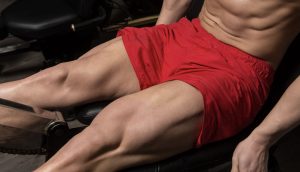
In osteopathic and holistic traditions alike, the body is seen as a mirror of balance — physical, emotional, and spiritual. Yet one area that often goes unnoticed in this reflection is the quadriceps, the large muscles at the front of the thighs.
Recent research is illuminating something that traditional movement practices have long intuited: strong legs are vital for a long and healthy life.
Leg Strength and Longevity
Several large-scale and disease-specific studies show that quadriceps (or lower-limb) strength correlates with lower mortality risk and better outcomes in chronic disease:
- A meta-analysis covering nearly 2 million participants concluded that higher lower-body muscle strength (e.g. knee extension tests) was associated with a 14 % lower risk of death compared to those with weaker strength. PubMed
- In patients with coronary artery disease (CAD), greater quadriceps isometric strength (QIS) was strongly associated with lower all-cause and cardiovascular mortality. Each 10 % increase in strength relative to body weight corresponded to hazard ratios of 0.77 (all-cause death) and 0.66 (CV death). PubMed+2American Journal of Medicine+2
- Among older patients with heart failure, lower quadriceps strength was likewise predictive of higher mortality risk. PubMed+1
- In chronic obstructive pulmonary disease (COPD) cohorts, quadriceps weakness predicted mortality more robustly than BMI or fat-free mass index. PMC
- Interestingly, a study from the Health, Aging, and Body Composition (Health ABC) cohort found that strength, not muscle mass, is the key predictor: measures of grip and knee extension strength were more predictive of mortality than simple measures of muscle size. OUP Academic+2Johns Hopkins University+2
These findings suggest that strength is not just about how big the muscle is — it’s how well it functions, how well it is activated, how well it supports daily life.
Even more recently, a 2025 study argued that muscle power (how quickly force can be produced) may outperform pure strength as a mortality predictor in middle-aged and older adults. ScienceDirect
Why the Quads Matter Beyond Strength
The quadriceps are more than just “big movers.” They stabilise the knees and pelvis, influence posture, and play a crucial role in grounding — both physically and energetically.
From a physiological perspective:
- Strong quads help maintain joint alignment and reduce compensatory strain on hips, back, and ankles.
- Lower-limb muscle groups are among the largest in the body, meaning they play a dominant role in metabolic health, glucose uptake, and insulin sensitivity.
- In osteopathic thinking, robust muscular tone in the legs supports optimal venous and lymphatic return, relieving pressure on circulatory systems and enabling efficient fluid dynamics.
From a holistic or energetic lens, weak quads may signal a loss of rootedness — an embodied sense of support and stability. To rebuild them is to re-establish connection with the earth beneath us.
Practical, Mindful Ways to Rebuild Quadriceps Strength
You don’t need heavy machines or a gym membership to begin cultivating quad strength. Start where you are, with consistency, mindfulness, and respect for your body’s signals:
- Chair Pose (Utkatasana) — builds quad endurance, engages breath, and encourages inner strength.
- Supported Wall Sits — a static isometric hold that strengthens without impact.
- Resistance Band Leg Extensions — ideal for home practice; gives the muscle load without heavy weight.
- Conscious Walking or Stair Climbing — turning everyday movement into strength practice by engaging the quads actively and mindfully.
Over time, you may notice changes beyond stronger legs — improved circulation, better balance, freer movement, greater confidence in your walking.
Importantly: doing something is more powerful than doing nothing. Strength gained through consistency—even in small doses—is cumulative and meaningful.
There is also supportive trial evidence: in a long-term follow-up of the LISA (Live Active Successful Ageing) study, older adults who engaged in 1 year of heavy resistance training preserved vital leg strength better over subsequent years than those doing moderate or usual exercise. News-Med
“Each 10 % increase in quadriceps strength (relative to body weight) corresponded to a 23 % reduction in all-cause mortality risk in patients with coronary disease.” (Gerber et al., Am J Med) ScienceDirect
“Strength, but not muscle mass, is independently associated with mortality in older adults.” (Health ABC cohort study) OUP Academic+2Johns Hopkins University+2