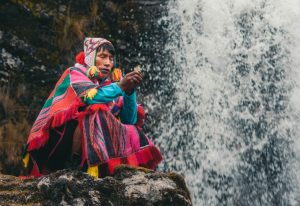
High in the Peruvian Andes — above the clouds, beyond the roads, in deep valleys held sacred by the mountains — live the Q’ero Nation, the last living inheritors of the Inka spiritual lineage. Their traditions survive in place, in relationship with Pachamama (Mother Earth), the Apus (mountain-spirits), and the cosmic orders that sustain the world.
Who Are the Q’ero?
The Q’ero are a Quechua-speaking Indigenous community residing mainly in the provinces of Paucartambo and Quispicanchi in the Cusco region of Peru. Wikipedia+2stories.kahtoola.com+2
Their villages are often located at altitudes between ~3,800 and 4,500 m above sea level, in rugged terrain that has historically afforded them a degree of isolation from colonial and modern influences. SpringerLink+2stories.kahtoola.com+2
In recognition of their cultural depth, in 2007 the Peruvian government declared the Q’ero heritage as a National Cultural Patrimony (Patrimonio Cultural de la Nación). thomasmullerperu.com+2ticketmachupicchu.com+2
Some sources also highlight that the Q’ero preserve ancient weaving, ritual, and symbolic traditions thought to be continuous with Inka-era practices. Inca Medicine School+2SpringerLink+2
One of the most frequent origin stories is that the Q’ero are descendants (in spiritual or ancestral lineage) of Inka lineages. While definitive genetic proof is sparse, in both Q’ero oral history and popular spiritual narratives, the idea of continuity with the Inka is central. Wikipedia+2stories.kahtoola.com+2
The Q’ero Worldview: Ayni, Reciprocity, and Non-Human Persons
At the heart of Q’ero cosmology is Ayni — the principle of sacred reciprocity. All life participates in a reciprocal exchange: giving, receiving, balancing. Humans, mountains, rivers, and spirit-beings all contribute to that flows of life. Inca Medicine School+3SpringerLink+3ResearchGate+3
Anthropological studies emphasize how, among Q’ero and other Andean communities, nature is not considered “other” but animate and relational. Mountains (Apus), for example, are conceived of as non-human persons — beings with intentionality, agency, and relationality to human actors. ResearchGate
In rituals (e.g. haywakuy) the Q’ero paqos (healers) call to the apus, give offerings, and affirm kin-relations with these mountain-spirits, reinforcing the relational balance between human and non-human worlds. ResearchGate+1
This isn’t framed as superstition, but as ontology: a lived logic in which the world is composed of multiple relational strata (earth, mountain, sky, inner realms). ResearchGate+1
Paqos: Stewards of Energy, Ceremony, and Balance
Within Q’ero tradition, paqos (sometimes called Altomisayuq, Pampamisayuq, etc.) are initiated healers, conditioners of energy, and mediators between worlds. Their work is not only ritual but deeply relational and energetic. Wikipedia+2SpringerLink+2
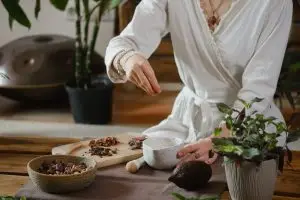
They work with sacred bundles (mesas), coca leaves (k’intus), stones (khuyas), and intention to restore harmony in a person’s poq’po (energy field) and to re-align the life-force known in Quechua as Kawsay. epublications.marquette.edu+1
Rather than viewing illness as purely mechanical or pathological, Q’ero practice treats imbalance or disconnection as the root of suffering — a disharmony in relationship to self, nature, and cosmos. epublications.marquette.edu+1
Why the Q’ero Teachings Matter Today
The wisdom and practices of the Q’ero resonate deeply in our era of disconnection, ecological crisis, and spiritual longing. Their teachings remind us that we are not separate from the land, but members of it.
- Their relational worldview offers an alternative to extractive models of nature — one of belonging, reciprocity, and respect.
- In the face of climate change and environmental collapse, their emphasis on balance, humility, and service carry ecological ethics that are irreplaceable.
- Many of their ceremonies, cosmologies, and symbolic systems may seem “alternative” to Western thought — but they offer a mode of healing that transcends reductionism and re-invites mystery.
Steven Webster describes how the Q’ero community has navigated modernization, tourism, and internal pressures, while still maintaining core patterns of reciprocity and spiritual sovereignty. SpringerLink
At the same time, scholars have warned of commodification of Q’ero spirituality — when external demand, “shamanic tourism,” or new-age appropriation distorts lineages. Ethical engagement, humility, and accountability to Q’ero elders is essential. ResearchGate+1
Suggested Citations & Further Reading
Reciprocity and Redistribution in Andean Civilizations (Murra) — especially in chapters referencing the Q’ero lineage and Andean reciprocal systems. haubooks.org
Autumn J. DeLong & Mirtha Irco, “What We Mean When We Say ‘Religion’: The Q’ero Migrants of Cusco, Peru”, Journal of Gender, Ethnic, and Cross-cultural Studies (2022). epublications.marquette.edu+1
Anna Przytomska-La Civita, “Apus: Non-human persons in the ontology of Q’eros from the Cordillera Vilcanota, Peru” (2019). ResearchGate
Steven Webster, Returning to Q’ero: Sustaining Indigeneity in an Andean Ecosystem, 1969–2020 (Springer). SpringerLink
Q’ero Mysticism & Heritage Appropriation in Andean New Age Healing. ResearchGate
Thomas Müller, Q’ero: Immaterial National Cultural Patrimony of Peru (2007 declaration) thomasmullerperu.com
Lescano, S. B., By Stones and by Knots: The archaeology and cultural history of the Qhapaq Ñan project in Cusco (digital commons). digitalcommons.library.umaine.edu